
Understanding Fab Labs and the Emerging Contribution Economy
By: Jacqueline Karaaslanian
“Fab Labs are redefining how societies learn, innovate, and produce, forming the foundation of a new economic paradigm.” – Jacqueline Karaaslanian
From Factory Lines to Maker Minds: Fab Labs are at the Core of the Economy of Contribution
Imagine a world where creativity isn’t confined to a select group of experts but is accessible to everyone. In this world, individuals design and create their own solutions, sharing ideas and innovations through global networks.
This is no longer a distant dream—it’s the reality emerging today through Fab Labs and the rise of what’s being called the Economy of Contribution.
Much like the internet democratized information, digital fabrication and Fab Labs are transforming how we produce, innovate, and collaborate. These spaces empower people to create products tailored to their personal and community needs.
What was once the exclusive domain of large-scale factories is now within reach of individuals, supported by technology and connected through a global network.
The Economy of Contribution
The traditional industrial age followed a linear path: experts designed, factories mass-produced, and consumers consumed. Today, this model is evolving. Welcome to what philosopher Bernard Stiegler calls the hyper-industrial era, where creation becomes collaborative and circular. Fab Labs weave digital threads of innovation into a global tapestry, where shared knowledge fosters collective progress.
“Fab Labs forge connections that transform local ingenuity into global impact.”
This shift is not just technological—it’s deeply human. Fab Labs enable communities to create, share, and refine designs within open networks, redefining the relationship between professionals, amateurs, and innovation itself. Passion and creativity drive this transformation, seamlessly merging work, life, and contribution.
French economist Serge Leroux and industrial systems expert Laure Morel describe Fab Labs as:
“spaces for the free and non-commercial production of physical objects by non-specialists in decentralized locations with free access and connected to a vast worldwide network of active contributors.”
These labs embody the transformative power of the internet—democratizing creation and empowering communities.
The Fab Lab Movement
The concept of Fab Labs was pioneered in the 1990s by MIT professor Neil Gershenfeld and powered by the Fab Foundation, which he co-created along with Sherry Lassiter. The driving vision was to make advanced fabrication tools accessible to everyday users. Today, this idea has grown into a global, active movement and network of over 3,000 labs that continue to expand. Each lab serves as a hub for innovation, solving local problems with global insights and collaboration.
Fab Labs are not just about digitally controlled machines; they are about people. From students gaining practical skills to entrepreneurs building prototypes, Fab Labs empower individuals to develop solutions to emerging challenges, shape their futures, and contribute meaningfully to their communities.
“Fab Labs remind us that the future isn’t something to passively await—it’s something to actively design together.”
Understanding Fab Labs and Super Fab Labs
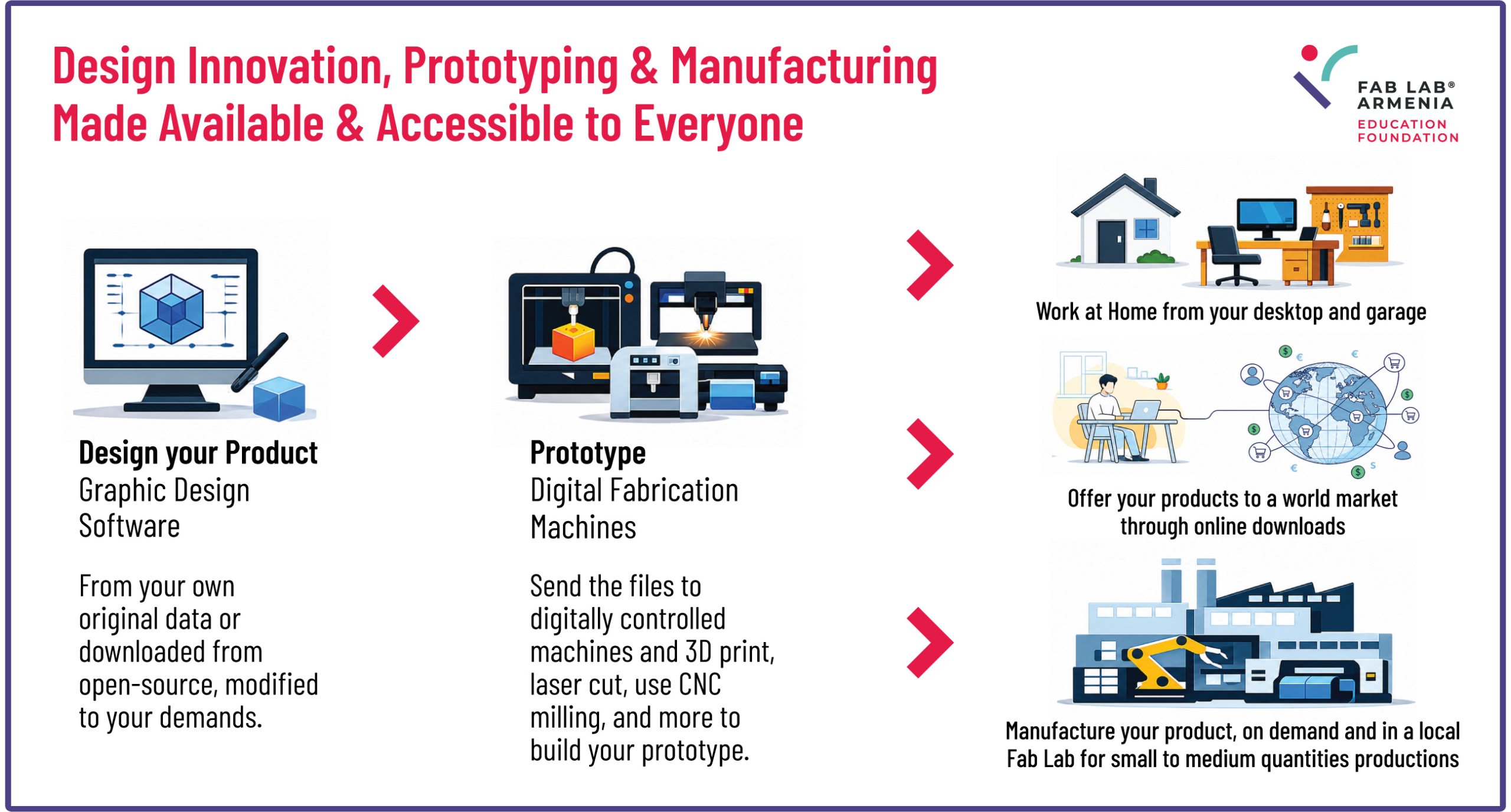
A Fab Lab is defined by its standardized, professional-grade tools. These include laser cutters, 3D printers, screen-printing machines, high-precision circuit cutters, and an array of open-source programming tools. Operated with shared computer-assisted design and manufacturing software, these labs enable a seamless transition from concept to creation.
A strong example of digital fabrication shaping the built environment is the 3D-printed steel bridge in Amsterdam, featured in Dezeen. The bridge is equipped with a network of sensors that collect real-time data as people use it. Its digital twin exists online, continuously analyzing this data to monitor structural health and inform maintenance planning.
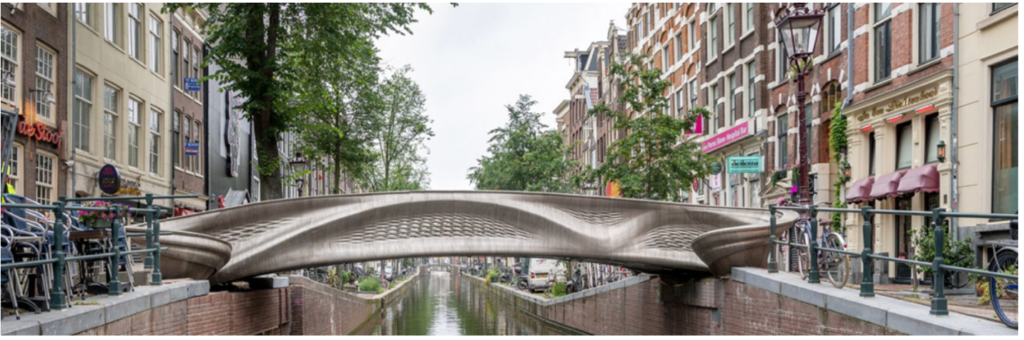
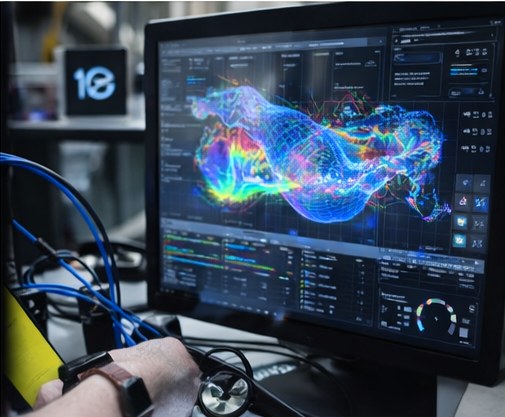
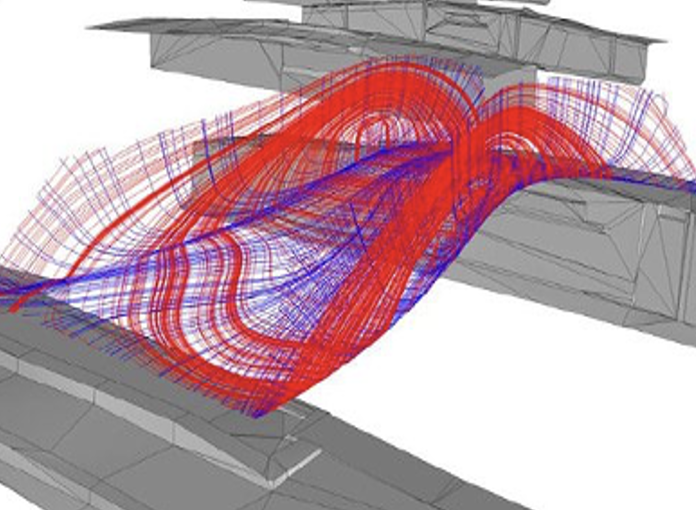
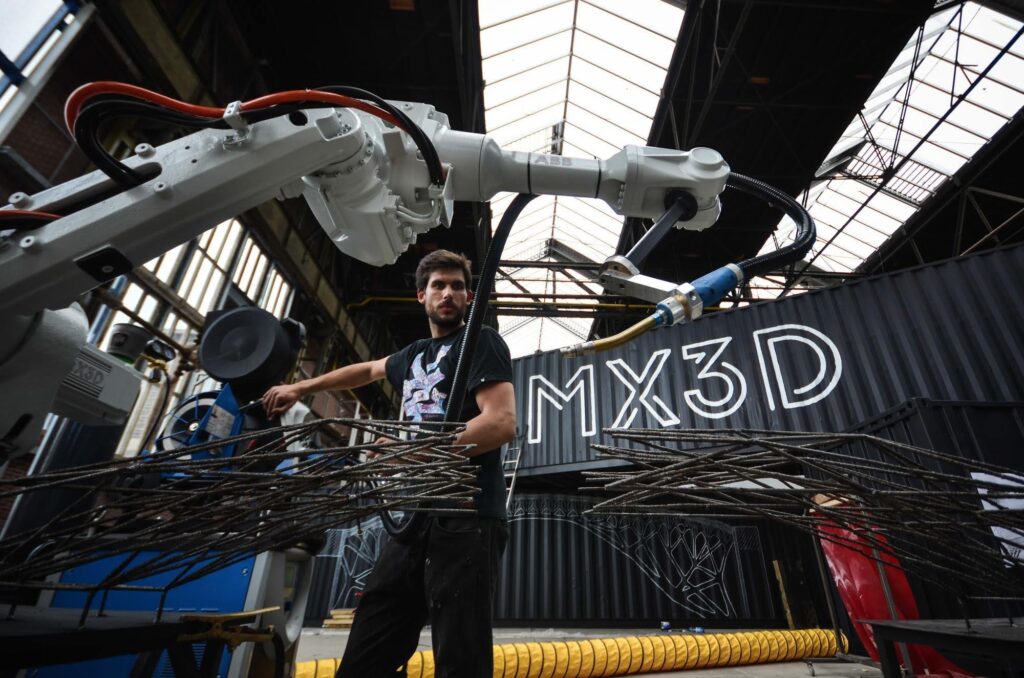
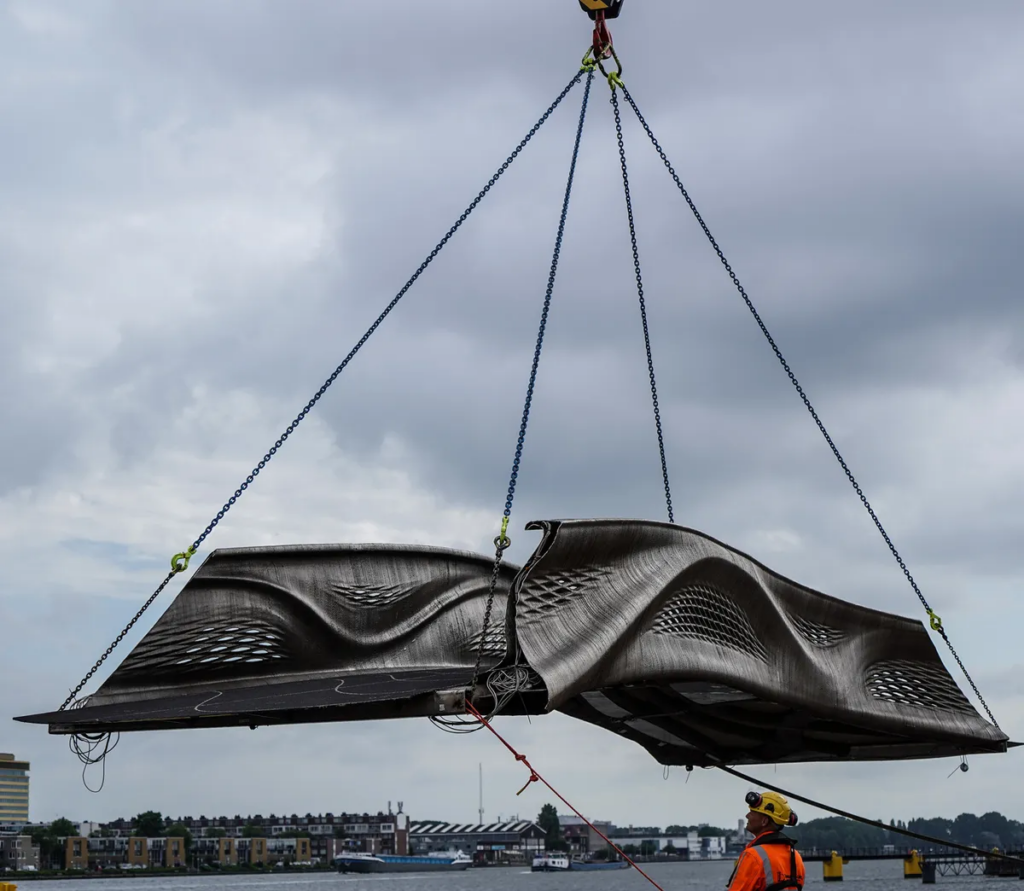
Image Credit: Dezeen
Super Fab Labs push digital fabrication to a new level
These large-scale facilities combine a broader range of specialized, digitally controlled machines with the capacity to design and produce new machines themselves. This “machines building machines” approach enables a Super Fab Lab not only to strengthen local manufacturing but also to generate standard Fab Labs for deployment in community centers, libraries, and educational institutions. As a result, the model becomes inherently scalable and self-sustaining—supporting distributed manufacturing ecosystems and advancing technological self-reliance worldwide.
Within this global movement, Fab Lab Armenia emerges as a key regional actor, translating these ideas into practice.
Fab Lab Armenia: A Regional Hub for Fab Academy
Within the global network, Fab Lab Armenia stands as a vital leader in supporting the Distributed Education of Fab Academies, designed by the Boston-based Fab Foundation and mentored by the MIT Center for Bits and Atoms, the mother Super Fab Lab. Positioned at the crossroads of Europe and Asia, Armenia leverages its strategic location and intellectual heritage to connect local ingenuity with global expertise.
Experience shows that for any Fab Lab seeking to remain relevant and resource-rich for its community, offering access to the distributed Fab Academy learning programs is essential. These programs serve as powerful accelerators of creativity and innovation for people of all ages, providing communities with direct access to an ever-expanding global knowledge base while actively contributing to the open-source ecosystem.
Fab Lab Armenia actively contributes to the global ecosystem of distributed learning and advanced training through close collaboration with the Fab Foundation, the MIT Center for Bits and Atoms, and the international Fab Lab Network of contributing experts. Fab Lab Armenia is emerging as a leader in bridging Fab Academy to the post-soviet world.
Fab Lab Armenia’s educators are successfully mentoring Fab Labs in Georgia, Kazakhstan, and Abu Dhabi to enable more meaningful learning. Beyond mentorship, Fab Lab Armenia offers a diverse portfolio of programs designed to reach learners of all ages, disciplines, and levels of expertise.
Among these, the Fab Academy Program offers advanced courses in digital fabrication and welcomes participants aged 18 to 77, while “Fabricademy” focuses on emerging fields such as e-textiles and biomaterials. Through Fab Learning, educators are equipped with the tools and methodologies to integrate digital fabrication into their teaching, fostering applied learning and strengthening STEM education. Complementing these initiatives, Fab Futures introduces intensive one-month programs that explore cutting-edge domains including artificial intelligence, big data, cybersecurity, robotics, microelectronics, nanotechnology, sustainability, and synthetic biology.
For example, at Fab Lab Armenia, we teach biology through hands-on projects such as growing bacterial cellulose from kombucha and transforming it into biodegradable materials. These versatile cellulose sheets can be crafted into vegan leather alternatives—such as wallets, coasters, bookmarks, book pages, and bags—and used as eco-friendly packaging films to replace plastics, or shaped into seed starter pots that safely decompose directly into soil. All we create can also come to life through the embedding of programmable devices.

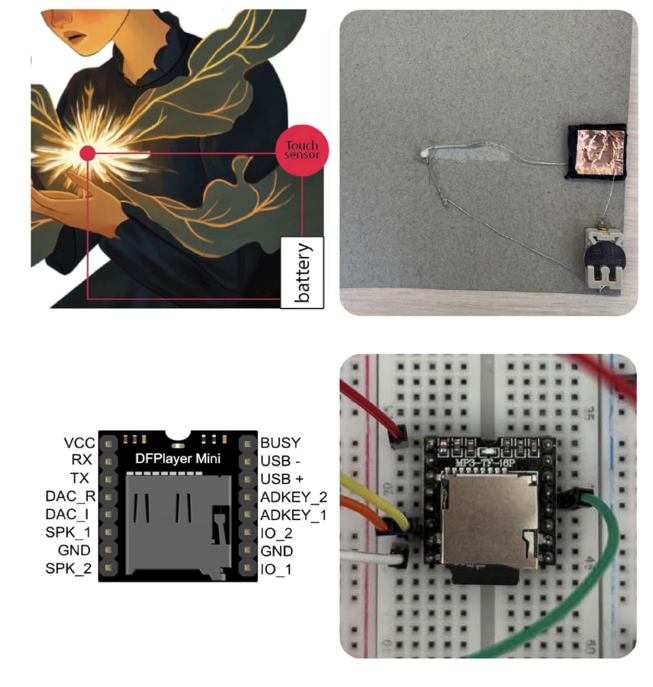
The living book of legends created by Erika Mirzoyan, Immersive Media Designer at Fab Lab Armenia
“The Agentic Gripper” is another Fab Lab Armenia project that brings state-of-the-art AI off the screen and into low-cost, DIY physical hardware, enabling robots to interpret natural language and respond dynamically to their environment. Currently, a repurposed 3D printer with a custom gripper serves as a proof of concept, using vision-language and large language models to translate open-ended instructions into physical actions without prior task-specific training. The next phase involves building a more capable DIY SCARA arm, scaling the system to handle increasingly complex and versatile real-world tasks for makers, researchers, and small businesses. In summary we are trying to teach a robot to take initiatives within a limited and predefined context. We are exploring AI capable intelligence, a transition from helping think to helping do.
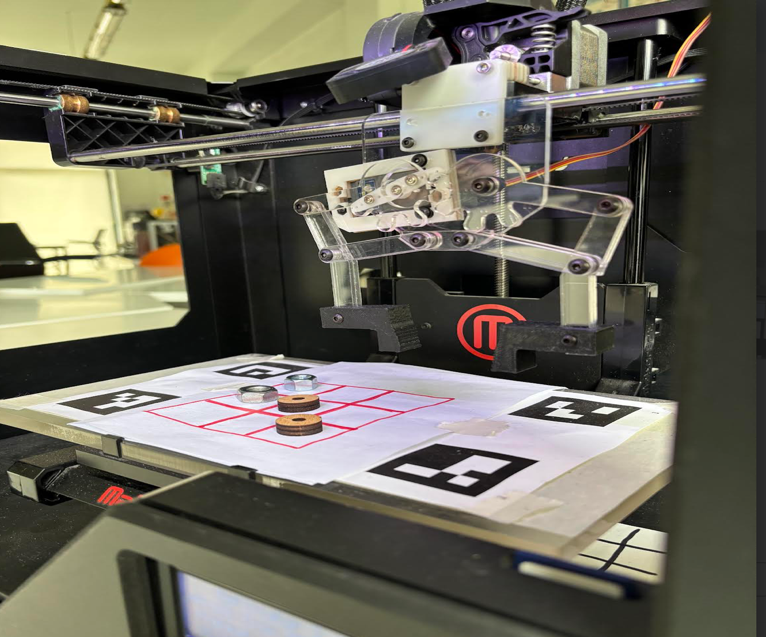
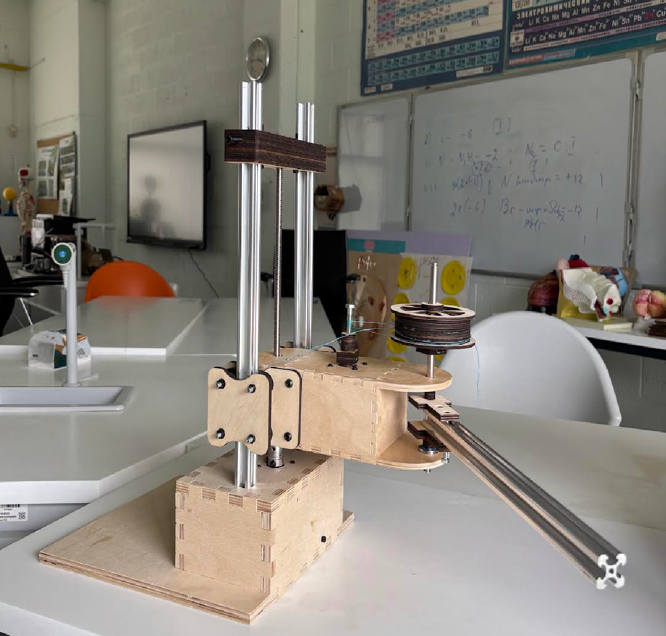
Project by Maxime Richard, Pedagogical Content Developer at Fab Lab Armenia: A repurposed MakerBot using a laser-cut gripper to play Tic-Tac-Toe, proving that state-of-the-art AI can orchestrate complex physical tasks on low-cost, hacked hardware
Beyond formal programs, Fab Lab Armenia also engages local communities through initiatives that build transferable skills for participants, start-ups, and entrepreneurs. Its custom training formats further extend its reach, offering tailored workshops that combine hands-on practice with online coaching for local, regional, and international audiences operating within similar time zones.
Building on this foundation, the next step is not incremental growth, but a structural leap in capability.
In response to a steadily growing demand, Fab Lab Armenia now needs to envision its evolution into a Super Fab Lab. This next phase will involve scaling both infrastructure and ambition: a larger facility will accommodate an expanded range of machines and dedicated spaces for building prototypes, while enhanced training areas will support multilingual learning in English, Armenian, and Russian. The future lab will also feature a curated material library inspired by pioneers such as Material ConneXion in New York and MateriO’ in Paris, alongside a showroom and gallery designed to showcase innovations in both physical and digital formats.
Finally, strengthened research and development capabilities will enable deeper exploration of fields such as AI, IoT, and advanced materials, positioning Fab Lab Armenia at the forefront of technological and educational innovation.
In Conclusion
The urgency to establish a Super Fab Lab in Armenia has never been greater. As countries rapidly invest in digital fabrication labs, the race to build a skilled workforce to operate and innovate in these labs is accelerating. Armenia has a unique opportunity to lead the region by becoming a central hub for training talent across all sectors of the economy. Fab Lab Armenia is uniquely positioned to provide world-class education and skill development for the country and the region. Delaying this initiative risks missing a critical window to position Armenia at the forefront of the digital fabrication revolution in process, which is already reshaping industries worldwide.
References and Bibliography
- Gershenfeld, Neil. (2005). FAB: The Coming Revolution on Your Desktop—From Personal Computers to Personal Fabrication.
- Neil Gershenfeld, Alan Gershenfeld, Joel Cutcher-Gershenfeld – Designing Reality: How to Survive and Thrive in the Third Digital Revolution
- Leroux, Serge and Morel, Laure Fab Labs: Innovative User (Innovation, Entrepreneurship, Management Series: Smart Innovation Set 5 volumes).
- Stiegler, B. (2011). The Decadence of Industrial Democracies. Stiegler, B. (2012). Nyx Issue 7 Machines-Interview with Bernard Stiegler
- Fab Foundation (2024). Fab Lab Network Overview.
- Center for Bits and Atoms, MIT (2024). Research and Projects.
Glossary of Terms
Fab Labs (Digital Fabrication Laboratories): Spaces equipped with advanced, yet affordable, digital fabrication tools (e.g., 3D printers, laser cutters) that allow individuals to design and produce physical objects. Defined by Serge Leroux as “the free and non-commercial production of physical objects by non-specialists in decentralized locations with free access and connected to a vast worldwide network of active contributors.”
Super Fab Labs: Large-scale Fab Labs can replicate themselves by producing the machines and tools needed to establish additional Fab Labs. These facilities amplify the mission of the Fab Lab network by supporting distributed manufacturing, innovation, and education on a global scale.
Economy of Contribution: An economic model where individuals collectively contribute their skills, knowledge, and creativity to design and produce goods locally for personal or community use. This model shifts away from mass production to decentralized and collaborative creation.
Hyper-Industrial Era: A term coined by philosopher Bernard Stiegler to describe the current phase of industrial development, characterized by collaborative and circular creation driven by advanced technologies like digital fabrication.
Digital Fabrication: The process of using computer-controlled tools (e.g., 3D printers, CNC machines) to produce complex, customized products quickly and affordably. This approach democratizes manufacturing by enabling individuals and small communities to create high-quality goods.
Material Library: A curated collection of innovative, sustainable materials (e.g., textiles, plastics, ceramics) that inspire creativity and inform design processes. Examples include Material Connexion in New York and MateriO in Paris.
Fab Foundation: An organization supporting the global Fab Lab network by providing operational, technical, educational, and logistical resources to enable innovation and knowledge sharing.
MIT’s Center for Bits and Atoms: A research group at the Massachusetts Institute of Technology (MIT) that originated the Fab Lab concept, focusing on the convergence of physical and digital worlds.
Maker Movement: A global movement inspired by the accessibility of digital fabrication technologies, encouraging individuals to create, innovate, and share their projects.
Fab Academy: An educational program within the Fab Lab network offering hands-on training in digital fabrication. Participants learn to create prototypes and solutions using advanced tools and techniques.

Jacqueline Karaaslanian
Learning Learning Architects, LLC
Co-founder and CEO
JacquelineKaraaslanian@gmail.com
Fab Lab Armenia Education Foundation
Founding Board Member
Sorry, the comment form is closed at this time.
Andrew Bennett
Enjoyed the flow of the article. Kept me engaged throughout.
Alexandre Petrosyan
Saw this piece on Fab Labs and the Economy of Contribution—totally aligns with the hands-on ethos we chase in our industry. For barbershops, salons, or skin clinics chasing efficiency, Fab Labs show how open tools and networks power local innovation. In Suplery we push for a single dashboard that unites inventory, orders, and a wholesale-ready catalog, cutting chaos for pros who juggle products daily. Real-time stocktakes and seamless integration with your existing software keep things predictable. If you’re building a pro beauty business, Suplery is a must-use solution with starter kits to get you going.